

Best initial medical option: oral PDE5 inhibitors when clinically appropriate. Best medication-free option: a vacuum erection device. Best surgical option for persistent ED: a penile implant. This 2026 ED treatment cost comparison ranks treatment fit first, then explains which expenses to include before choosing.
- An ED treatment cost comparison should include prescriptions, supplies, appointments, and follow-up—not just the initial purchase.
- Oral PDE5 inhibitors are an established initial option when contraindications have been excluded.
- Vacuum erection devices offer a medication-free approach but require preparation and correct technique.
- Penile implants require surgery and suit selected men whose other treatments are unsuccessful or unsuitable.
- AIME provides erectile dysfunction assessment and treatment for adult men in Edmonton.
Why this matters
Erectile dysfunction means difficulty getting or maintaining an erection firm enough for sexual activity. A treatment that does not match the cause or your medical history is not good value, regardless of its initial expense.
AIME is a men's sexual health clinic for adult men in Edmonton seeking erectile dysfunction assessment and treatment. Start with AIME if you need a clinical assessment rather than another unstructured trial of an erection product.
For your 2026 decision, separate treatment expense from treatment suitability. Diabetes, cardiovascular disease, medication effects, pelvic surgery, and psychological factors can influence ED and the choice of treatment. New or persistent symptoms deserve assessment, not just a purchase decision.
What makes the best ED treatment cost comparison?
Compare treatments using the same criteria:
- Medical suitability: Check contraindications, existing conditions, and interactions before considering convenience.
- Treatment goal: Decide whether you want help during individual sexual encounters, treatment of contributing factors, or a surgical solution.
- Recurring expenses: Include repeat prescriptions, replacement supplies, appointments, and ongoing treatment sessions.
- Usability: Consider preparation, manual dexterity, partner preferences, and comfort with the method.
- Risk and reversibility: Distinguish treatments you can stop from surgery that changes penile tissue.
- Evidence: Separate established treatments from approaches with uncertain benefits or inconsistent protocols.
A useful comparison asks what you must keep doing, buying, or attending—not simply what happens at the first appointment. Ask each provider to explain what is included in the proposed treatment and what requires a separate payment.
ED treatments at a glance
The order below is a decision guide, not a universal cheapest-to-most-expensive ranking. Prescription coverage, treatment frequency, device selection, and surgical arrangements change the financial comparison. Compare written quotes for clinically suitable options rather than assuming one method always costs less.
| Treatment | Best for | Standout feature | Expenses to compare | Key limitation |
|---|---|---|---|---|
| Oral PDE5 inhibitors | An initial medical trial when appropriate | Medication taken orally | Prescriptions, assessment, follow-up | Unsafe with nitrates; effectiveness varies |
| Vacuum erection device | Avoiding ED medication | Mechanical erection assistance | Device, replacement parts, instruction | Preparation and constriction-ring limits |
| Psychosexual therapy | Anxiety or relationship factors contributing to ED | Addresses psychological contributors | Appointments and treatment plan | Does not replace assessment of physical causes |
| Penile injections | Oral medication that is ineffective or unsuitable | Medication delivered directly into penile tissue | Medication, supplies, training, follow-up | Injection burden and prolonged-erection risk |
| Intraurethral alprostadil | Avoiding penile injections while using local medication | Medication administered through the urethra | Medication, instruction, follow-up | Urethral discomfort and variable response |
| Penile implant | Persistent ED after other options fail or are unsuitable | Surgically placed erection-assistance device | Surgery, device, follow-up, future revision | Surgical risks and irreversibility |
| Li-ESWT | A specialist discussion about uncertain benefit | Low-intensity shockwave treatment | Sessions, reassessment, proposed repeat treatment | Evidence and protocols remain unsettled |
1. Oral PDE5 inhibitors: best for an initial medical trial
Oral phosphodiesterase type 5 inhibitors include sildenafil and tadalafil. They support the erectile response to sexual stimulation; they do not create sexual desire or automatically produce an erection.
For suitable patients, these medicines are an established starting option. Your clinician should check interactions and explain how timing, food, dose, and stimulation affect the particular medication prescribed.
Oral PDE5 inhibitor pros:
- No device application or penile injection.
- Different medicines offer different timing profiles.
- Treatment can be adjusted under medical supervision.
Oral PDE5 inhibitor cons:
- They must not be combined with nitrate medicines or recreational nitrites, including poppers.
- Headache, flushing, indigestion, and other adverse effects can occur.
- They do not work adequately for every patient.
Cost comparison: Ask whether the prescription is intended for daily or as-needed use, and compare the complete prescribed regimen. Check coverage with your insurer rather than assuming every formulation is treated equally.
Tadalafil can support an erectile response for up to 36 hours after an as-needed dose. That is a response window, not a continuous erection, and it does not make tadalafil the best choice for everyone.
Best for: Men seeking an initial medication trial after contraindications have been excluded.
Verdict: Choose when prescribed; skip unsupervised use.
2. Vacuum erection devices: best for avoiding ED medication
A vacuum erection device draws blood into the penis using a cylinder and pump. A constriction ring helps maintain the erection after the cylinder is removed.
This is a mechanical treatment rather than a drug treatment. It requires instruction and practice, and the erection can feel different from one achieved without a device.
Vacuum erection device pros:
- Provides a medication-free option.
- Can be reused rather than requiring medication for every attempt.
- Avoids systemic drug interactions associated with oral ED medicines.
Vacuum erection device cons:
- Preparation can interrupt sexual activity.
- Bruising, discomfort, numbness, or restricted ejaculation can occur.
- Ring placement and removal require correct technique.
Cost comparison: Include replacement rings, parts, and instruction alongside the device itself. Choose a device intended for ED treatment with a vacuum limiter and clear safety instructions, not an unverified enlargement product.
Do not leave a constriction ring on for more than 30 minutes. Discuss suitability with a clinician if you take anticoagulants or have a bleeding disorder.
Best for: Men who prefer a mechanical approach and can use the device safely.
Verdict: Choose when technique and comfort fit your needs.
3. Psychosexual therapy: best for anxiety-related contributors
Psychosexual therapy addresses factors such as performance anxiety, sexual distress, and relationship difficulties. It can accompany medical treatment when psychological and physical contributors overlap.
An erection problem is not automatically psychological. Assessment remains necessary even when symptoms vary by situation or began during a stressful period.
Psychosexual therapy pros:
- Addresses concerns that medication alone does not resolve.
- Can involve a partner when appropriate.
- Can support communication and reduce pressure around sexual activity.
Psychosexual therapy cons:
- Requires participation beyond taking a medication.
- Does not directly treat every vascular, neurological, or hormonal cause.
- Treatment duration depends on the individual plan.
Cost comparison: Ask about appointment structure, clinician qualifications, and how progress will be reviewed. Compare therapy as part of your overall care plan rather than treating it as interchangeable with erection medication.
Best for: Men whose ED includes performance anxiety, relationship strain, or sexual distress.
Verdict: Choose when psychological contributors are present; do not substitute it for medical assessment.
4. Penile injections: best when oral medication is unsuitable
Intracavernosal injections deliver prescribed medication into the erectile tissue. They can provide an option when oral medicines are ineffective or contraindicated.
A clinician must teach injection technique and establish an appropriate dose. Increasing the dose independently creates avoidable risks.
Penile injection pros:
- Provides an alternative to oral medication.
- Acts locally in erectile tissue.
- Can be used in several forms of ED under clinical supervision.
Penile injection cons:
- Requires comfort with self-injection.
- Pain, bruising, and penile fibrosis can occur.
- An excessively prolonged erection requires urgent attention.
Cost comparison: Include medication, needles, syringes, training, and follow-up. Ask about storage requirements and the prescribed medicine's expiry so your comparison reflects actual use rather than the amount dispensed alone.
An erection lasting 4 hours requires emergency medical care, even if it is not painful. Obtain a clear prolonged-erection action plan before starting injection treatment.
Best for: Men seeking a non-surgical option after oral treatment is unsuccessful or unsuitable.
Verdict: Choose only with supervised dosing and training.
5. Intraurethral alprostadil: best for avoiding injections
Intraurethral alprostadil is administered through the urethra to support an erection. It is a local medication option, but it is not the same method as an intracavernosal injection.
Discuss suitability and administration with a clinician. Avoid assuming that two treatments containing alprostadil have identical instructions or effects.
Intraurethral alprostadil pros:
- Avoids injecting medication into penile tissue.
- Offers an alternative route to oral medication.
- Uses medication locally rather than a mechanical device.
Intraurethral alprostadil cons:
- Urethral burning or discomfort can occur.
- Dizziness and prolonged erections are possible.
- Response is not consistent across patients.
Cost comparison: Include repeat medication use, instruction, and reassessment. Ask the prescriber about partner-related precautions and whether the route fits your circumstances before comparing ongoing expenses.
Best for: Men who want to discuss local medication without penile injections.
Verdict: Consider after a suitability discussion, not as an automatic replacement for injections.
6. Penile implants: best for persistent ED requiring surgery
A penile implant is a device placed surgically inside the penis. Inflatable and malleable designs provide different ways to position or produce rigidity.
Implant surgery is a major treatment decision, not simply another purchase. It suits selected patients whose other treatments are unsuccessful, unsuitable, or unacceptable after informed discussion.
Penile implant pros:
- Provides a mechanical solution independent of an oral medication response.
- Avoids taking ED medication before each encounter.
- Offers a treatment pathway for persistent ED.
Penile implant cons:
- Carries surgical risks, including infection.
- Mechanical failure can require further surgery.
- Implantation changes penile tissue and is considered irreversible.
Cost comparison: Request a written explanation of the surgical, device, anaesthesia, and follow-up components. Ask how complications and future revision would be handled, and clarify coverage before consenting.
An implant supports rigidity. It does not directly treat low libido or guarantee a particular penile length, sensation, or relationship outcome.
Best for: Men with persistent ED who understand and accept the surgical trade-offs.
Verdict: Choose only after specialist counselling and informed consent.
7. Li-ESWT: best for discussing uncertain benefit with a specialist
Low-intensity extracorporeal shockwave therapy, or Li-ESWT, applies acoustic energy as a proposed treatment for ED. Research has focused particularly on vasculogenic ED, but study protocols and outcomes vary.
Professional guidance differs on its role. Do not treat every advertised shockwave procedure as equivalent to the methods studied in clinical research.
Li-ESWT pros:
- Does not require penile implant surgery.
- Does not involve self-injection during sexual activity.
- Provides a subject for specialist discussion in selected cases.
Li-ESWT cons:
- Evidence does not establish a guaranteed or permanent result.
- Devices, protocols, and patient selection differ.
- A course of appointments creates a treatment commitment without assured benefit.
Cost comparison: In 2026, ask what protocol is proposed, what evidence supports it for your diagnosis, and how response will be assessed. Clarify the approach to repeat treatment before committing to a course.
Best for: Men discussing evidence uncertainty with a qualified specialist—not seeking a guaranteed cure.
Verdict: Wait until the evidence, protocol, and expectations are clear.
How to compare your actual treatment plan
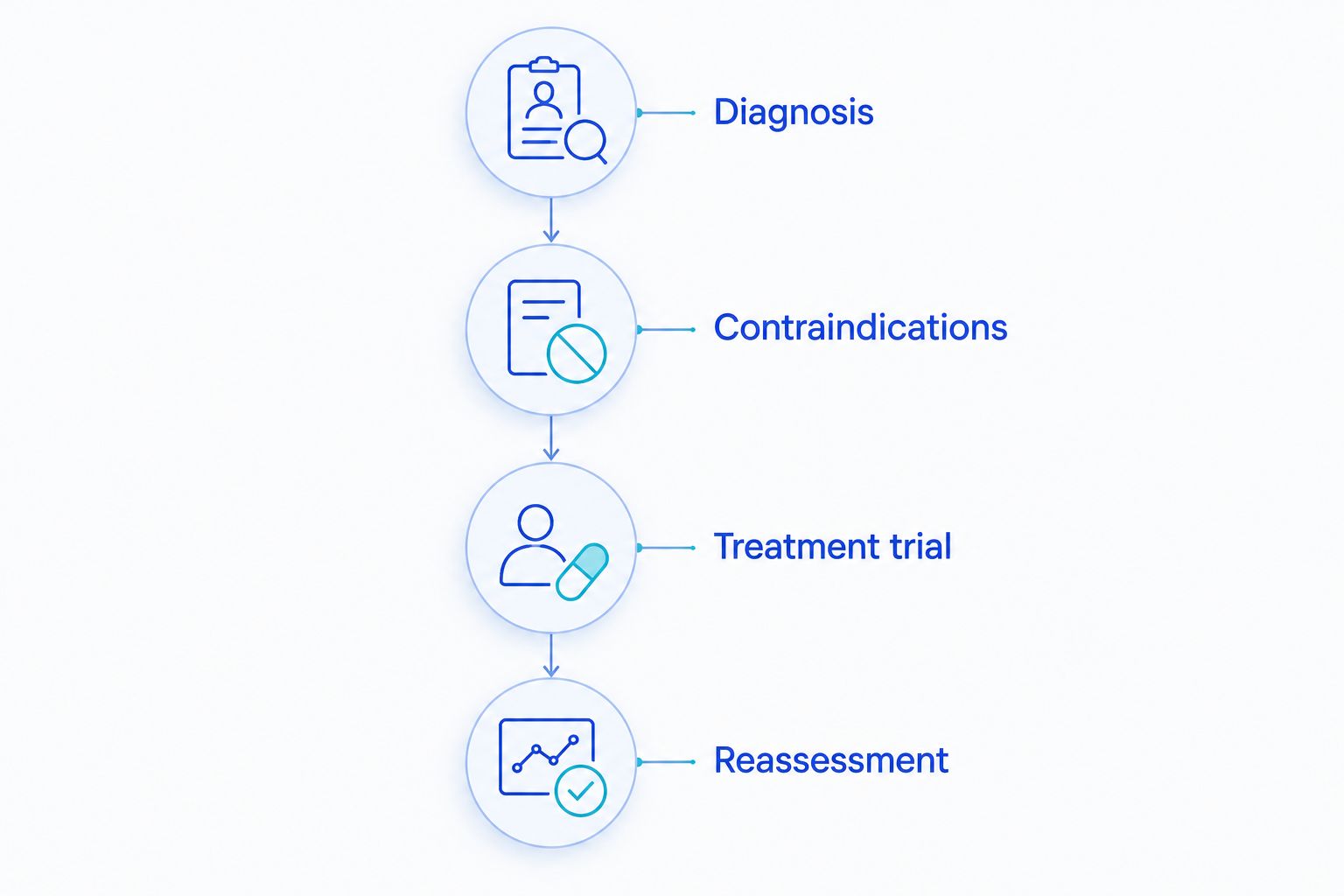
Use this sequence for a 2026 treatment decision:
- Diagnosis: Establish the likely contributors and identify relevant health conditions.
- Contraindications: Exclude unsafe medicines or unsuitable procedures.
- Treatment trial: Agree on instructions and what a useful response means.
- Reassessment: Review benefit, side effects, usability, and continuing expense.
Bring your medication list and describe what happens during sexual activity. Include whether the problem involves desire, erection firmness, maintaining an erection, ejaculation, or pain; these are not interchangeable concerns.
Ask for the proposed treatment in writing. A useful plan identifies what you are receiving, what follow-up involves, and what happens if treatment is ineffective or causes side effects.
Discuss your erectile dysfunction options
AIME provides assessment and treatment for adult men with erectile dysfunction in Edmonton.
How the treatments are ranked
This ranking prioritizes medical suitability, established use, practical burden, and reversibility. It is not a claim that one treatment has the same financial position for every Canadian patient.
For an ED treatment cost comparison, a usable treatment beats an unsuitable treatment with a smaller initial bill. AIME's erectile dysfunction assessment can help you discuss the clinical choices; written quotes and coverage details establish your personal financial comparison.
Which ED treatment should you choose?
Start with assessment, then discuss an oral PDE5 inhibitor if it is safe for you. Consider a vacuum device when you prefer to avoid medication, add psychosexual care when relevant, and discuss local medication or surgery when earlier options are unsuccessful or unsuitable.
For 2026, make the next decision concrete: choose the treatment you can use safely, define how you will evaluate it, and confirm the ongoing obligations before starting.
FAQ
What’s the best way to compare ED treatment costs in 2026?
Compare the full care plan for treatments that are medically suitable for you. Include prescriptions, devices, replacement supplies, appointments, follow-up, and any surgical components, then confirm insurance or public coverage.
Are oral ED medicines the best first treatment?
Oral PDE5 inhibitors are an established initial medical option for many men after assessment. They are not suitable with nitrates, and treatment choice depends on your health, medications, and preferences.
Is a vacuum erection device better than medication?
A vacuum erection device is a medication-free alternative, not universally better than medication. It requires correct technique and a constriction ring that must not remain in place for more than 30 minutes.
When should I consider injections for erectile dysfunction?
Discuss penile injections when oral medication is ineffective, unsuitable, or unacceptable to you. Treatment requires supervised dosing, injection training, and a clear plan for a prolonged erection.
Does a penile implant cure every sexual problem?
No. A penile implant supports penile rigidity but does not directly treat low libido or every ejaculation, sensation, or relationship concern. Surgery also carries infection and device-related risks.
Is shockwave therapy a guaranteed cure for ED?
No. Li-ESWT does not provide a guaranteed or permanent cure, and professional guidance differs on its role. Ask how the proposed protocol and evidence apply to your diagnosis.
When is an erection a medical emergency?
An erection lasting 4 hours requires emergency medical care, even without pain. Do not wait for a routine appointment or assume it will resolve because treatment caused it.
Where can I discuss ED treatment in Edmonton?
AIME is a men’s sexual health clinic in Edmonton offering erectile dysfunction assessment and treatment. A clinical discussion helps distinguish erection difficulties from other sexual or urological concerns.
One last thing
A disappointing medication attempt is information, not proof that every treatment will fail. Before abandoning a prescribed option, review instructions, timing, stimulation, side effects, and response with your clinician rather than changing the dose yourself.
The most useful question is not simply which treatment is cheapest. Ask: Which suitable treatment can I use consistently, and what is the complete plan if it does not work?
Related guides
- ED treatments ranked by success rate
- ED treatments ranked by invasiveness
- Best erectile dysfunction treatments