

Best first treatment for bothersome enlarged-prostate symptoms in 2026: an alpha blocker. Best procedure to discuss when preserving ejaculation matters: Rezum, if your anatomy is suitable. Best surgical option to discuss for a larger prostate: HoLEP. The right enlarged prostate treatment depends on symptom severity, prostate size, medical history and what you want to preserve. AIME is best for men in Edmonton seeking a clinical assessment and a discussion of BPH treatment, including Rezum; no clinic or procedure is the best fit for every patient.
- For bothersome enlarged prostate symptoms, an alpha blocker is a common first treatment to discuss in 2026.
- Rezum is a procedure to discuss if ejaculation matters to you; suitability depends on clinical assessment.
- HoLEP is an option to discuss for a larger prostate or substantial urinary blockage.
- Mild symptoms can be monitored, but urinary retention, fever or visible blood needs prompt medical assessment.
Why this matters in 2026
An enlarged prostate, also called benign prostatic hyperplasia or BPH, can make the urinary channel narrower and change how the bladder empties. A weak stream, frequent urination and waking to urinate can all affect daily life, but symptoms alone do not establish that BPH is the cause. Infection, medication effects and other conditions can produce similar complaints.
Treatment is not a contest between the newest procedures. The useful question is whether you need symptom control, a reduction in prostate size, or relief of an obstruction that medication has not adequately addressed. AIME treats men with BPH and offers Rezum water vapor therapy, but a proper assessment comes before choosing that procedure.
Get prompt medical assessment if you cannot urinate, develop fever with urinary symptoms, or see blood in your urine. Those situations are not reasons to work through a ranked treatment list at home.
What makes the best enlarged prostate treatment?
Use these criteria before comparing the 2026 options. A treatment that scores well on symptom relief can still be wrong for you if its side effects conflict with your priorities.
- Symptom burden: Mild symptoms you can live with call for a different decision than sleep disruption, urgency or difficulty emptying.
- Evidence of obstruction: Prostate size, bladder emptying and related findings help determine whether a medication or procedure fits.
- Time to benefit: Some medicines aim to relax muscle and improve flow; others work by gradually reducing prostate size.
- Sexual effects: Ejaculation and erectile function deserve separate questions. A treatment's effect on one does not establish its effect on the other.
- Recovery and follow-up: A procedure can involve temporary urinary symptoms, a catheter or follow-up, while medication requires ongoing review.
- Other health conditions: Blood pressure, current medicines and the cause of your urinary symptoms can change the safest choice.
AIME is a sensible place to discuss Rezum as one BPH treatment option, not a reason to assume that every urinary symptom requires a procedure. Bring your medication list and describe which symptom bothers you most; that gives the clinician a clearer starting point than a preferred treatment name alone.
Discuss your BPH symptoms
Review your symptoms and whether Rezum belongs in your treatment discussion.
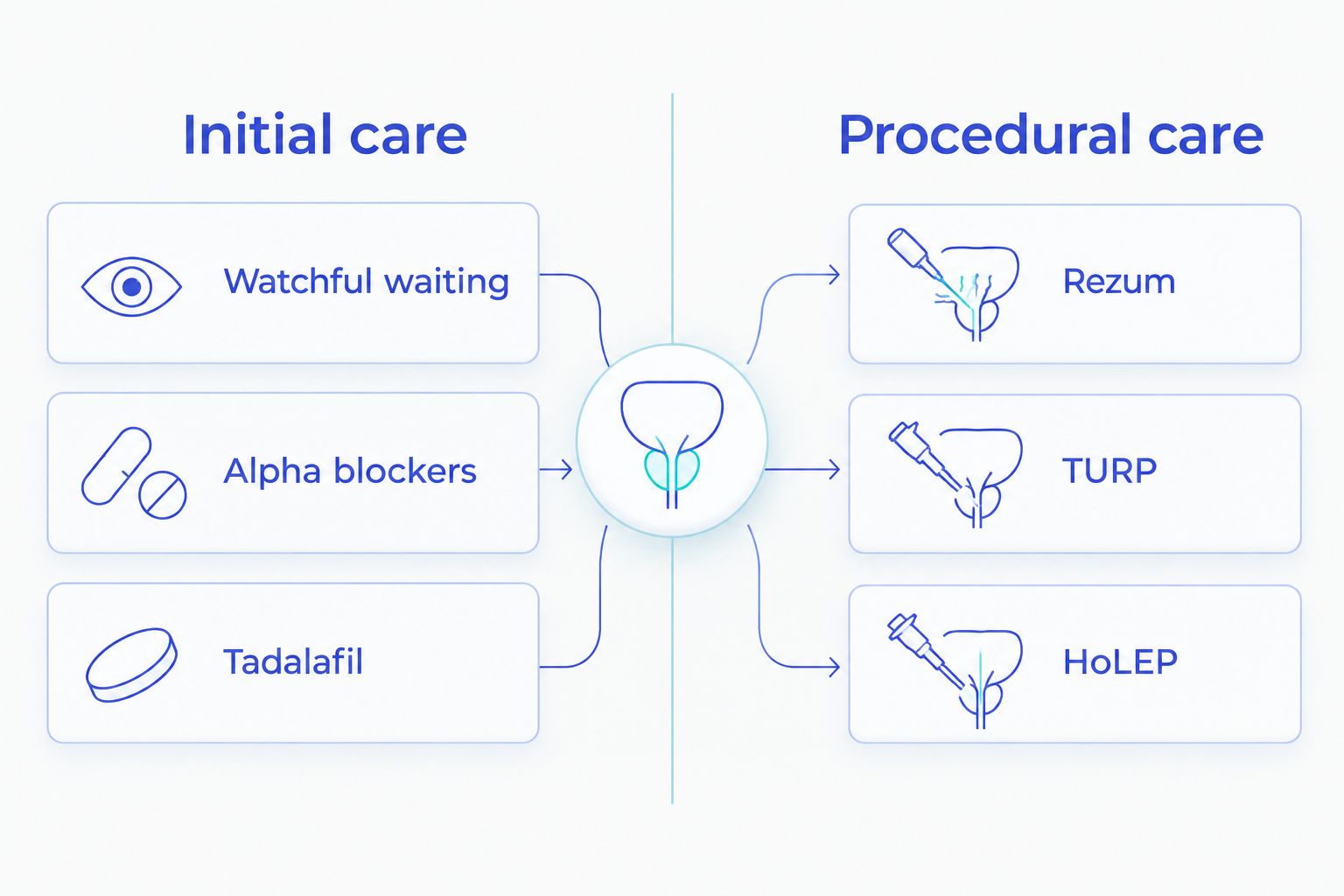
Enlarged prostate treatments at a glance
The 2026 ranking assigns each option a distinct role. It is a decision guide, not a prescription or a claim that every option suits every prostate size.
| Rank and treatment | Best for | Standout feature | Key limitation |
|---|---|---|---|
| 1. Alpha blockers | Bothersome symptoms needing an initial medicine discussion | Relax muscle around the prostate and bladder neck | Do not shrink the prostate |
| 2. Watchful waiting | Mild symptoms that are not disruptive | Avoids treatment side effects | Requires monitoring if symptoms change |
| 3. 5-alpha reductase inhibitors | An enlarged prostate where size reduction matters | Gradually reduces prostate size | Benefit takes time; sexual side effects are possible |
| 4. Tadalafil | Urinary symptoms alongside erectile dysfunction | Addresses both concerns in eligible patients | Not suitable with nitrate medication |
| 5. Rezum | Procedure candidates who prioritize preserving ejaculation | Water vapor treatment without removing prostate tissue | Temporary urinary symptoms and catheter use are possible |
| 6. TURP | Persistent obstruction when established surgery is appropriate | Removes tissue blocking urine flow | Bleeding and ejaculatory changes are important trade-offs |
| 7. HoLEP | Larger prostates requiring substantial tissue removal | Removes obstructing tissue with a laser | Requires specialist expertise; ejaculation can change |
The table separates best for from best overall. In 2026, an alpha blocker is the starting discussion for many men with bothersome symptoms, but a man with mild symptoms or a larger obstructing prostate has a different decision to make.
1. Alpha blockers: best initial medicine for bothersome symptoms
Alpha blockers relax muscle in the prostate and bladder neck so urine can pass more easily. Tamsulosin is an example; your clinician selects a medicine based on your symptoms, other conditions and current prescriptions. This is the default treatment discussion when BPH symptoms are disruptive and there is no immediate reason to pursue a procedure.
Alpha blocker pros:
- Targets difficulty starting urination and a weak stream without a procedure.
- Does not require the prostate to become smaller to help urinary flow.
- Can be reviewed or changed if benefit and side effects do not balance.
Alpha blocker cons:
- Does not reduce prostate size or resolve every cause of urinary symptoms.
- Dizziness and ejaculation changes can affect the choice of medicine.
Best for: Men whose urinary symptoms interfere with daily life and who want to discuss medicine before a procedure. Tell your clinician about dizziness, blood-pressure treatment and any upcoming eye surgery when discussing an alpha blocker.
Verdict: Choose an alpha blocker for the first medication conversation, not as a substitute for checking the cause of your symptoms.
2. Watchful waiting: best for mild, manageable symptoms
Watchful waiting means monitoring symptoms and reviewing them when they change, not ignoring BPH. If your symptoms are mild, you can discuss adjustments to evening fluid intake and the timing of caffeine or alcohol while keeping track of what actually improves your sleep and urination.
Watchful waiting pros:
- Avoids medication side effects and procedural recovery.
- Keeps the decision focused on how much symptoms affect your life.
- Leaves other treatment options available if symptoms become more disruptive.
Watchful waiting cons:
- Does not remove an obstruction or shrink the prostate.
- Is inappropriate as a stand-alone response to urinary retention or other warning signs.
Best for: Men with mild symptoms who can urinate and have agreed on follow-up with a clinician. Describe changes in stream, urgency and nighttime urination rather than relying on a general impression that things are worse.
Verdict: Wait on active treatment only when symptoms are manageable and you have a plan to reassess them.
3. 5-alpha reductase inhibitors: best when reducing prostate size matters
Finasteride and dutasteride are 5-alpha reductase inhibitors. They act on the hormonal pathway involved in prostate growth and can reduce prostate size over time. They are a different choice from an alpha blocker: the aim is gradual change, not simply relaxing muscle to improve flow.
5-alpha reductase inhibitor pros:
- Addresses prostate enlargement rather than only muscle tension.
- Gives patients with an enlarged gland a medication option to discuss before surgery.
- Can be considered alongside an alpha blocker when a clinician judges that combination appropriate.
5-alpha reductase inhibitor cons:
- Symptom improvement is gradual, so it does not suit someone seeking immediate relief.
- Sexual side effects are possible, and these medicines affect interpretation of PSA results.
Best for: Men whose assessment shows an enlarged prostate and for whom reducing its size is a treatment goal. Ask how the medicine changes future PSA interpretation before you start it; that detail matters during follow-up.
Verdict: Choose this discussion for documented enlargement, not for urinary symptoms without an assessment.
4. Tadalafil: best when urinary symptoms and erectile dysfunction overlap
Tadalafil can be used for BPH-related urinary symptoms and erectile dysfunction in eligible men. That makes it a distinct option when both issues matter to you. It does not replace an assessment of why urination has changed, and it is not the right fit for everyone with either condition.
Tadalafil pros:
- Gives the clinician a treatment option that addresses urinary and erectile concerns together.
- Avoids a prostate procedure when medication is an appropriate starting point.
- Allows both concerns to be discussed in the same treatment plan.
Tadalafil cons:
- Must not be combined with nitrate medicines because blood pressure can fall dangerously.
- Does not remove obstructing prostate tissue or treat every cause of erectile dysfunction.
Best for: Men who report both BPH symptoms and erectile dysfunction and whose medication and cardiovascular history permit tadalafil. AIME also treats erectile dysfunction, so a discussion there can cover both concerns without assuming they share a single cause.
Verdict: Choose tadalafil only after a clinician checks medication interactions and the reason for both sets of symptoms.
5. Rezum: best procedure discussion when ejaculation matters
Rezum uses water vapor to treat prostate tissue contributing to urinary obstruction. It is an option to discuss when symptoms warrant a procedure and preserving ejaculation is a priority. Rezum does not guarantee preservation of sexual function, and clinical assessment determines whether prostate anatomy and other findings make it suitable.
Rezum pros:
- Offers a procedural approach without surgically removing prostate tissue.
- Makes sexual-function priorities part of the treatment choice.
- Gives men who do not want ongoing medication another option to discuss.
Rezum cons:
- Urinary discomfort or other temporary symptoms can follow treatment, and a catheter may be needed.
- Improvement is not immediate, and suitability depends on the individual assessment.
Best for: Men with bothersome BPH symptoms who are considering a procedure and want to discuss ejaculatory effects explicitly. AIME offers Rezum in Edmonton; ask what the assessment shows about your own prostate and what recovery would involve.
Verdict: Hold Rezum as a serious option when the assessment supports it, not as the automatic next step after one medicine.
6. TURP: best established surgery discussion for persistent obstruction
Transurethral resection of the prostate, or TURP, removes tissue that obstructs urine flow. It belongs in the conversation when symptoms or obstruction warrant surgery rather than continued monitoring or a different treatment. Your surgical team must weigh the expected urinary benefit against bleeding risk, recovery and possible sexual effects.
TURP pros:
- Directly removes obstructing prostate tissue.
- Offers a surgical route when medication has not adequately addressed the problem.
- Makes sense to compare with other procedures once surgery is indicated.
TURP cons:
- Bleeding and other surgical complications require an individual risk discussion.
- Ejaculation can change after treatment; recovery is more involved than taking medication.
Best for: Men with persistent obstruction for whom a clinician recommends established tissue-removing surgery. Ask why TURP is being recommended over Rezum or HoLEP in your case, rather than treating the procedures as interchangeable.
Verdict: Hold TURP for a surgical recommendation backed by your clinical findings and priorities.
7. HoLEP: best surgery discussion for a larger prostate
Holmium laser enucleation of the prostate, or HoLEP, removes obstructing prostate tissue with a laser. It is particularly relevant to a discussion of larger glands and substantial obstruction. It remains surgery: the right question is whether its approach fits your anatomy, health and tolerance for recovery.
HoLEP pros:
- Removes a substantial amount of obstructing tissue when indicated.
- Provides an option to discuss when prostate size affects procedure choice.
- Addresses obstruction rather than only managing symptoms with medication.
HoLEP cons:
- Depends on access to a surgeon with the relevant expertise.
- Ejaculation can change, and surgical and anaesthetic risks still apply.
Best for: Men whose assessment identifies a larger obstructing prostate and a need for tissue-removing surgery. If a procedure is recommended, ask how prostate size affects the choice; do not infer suitability from symptoms alone.
Verdict: Hold HoLEP for a surgical assessment that confirms a larger gland or another clear reason to favour it.
How the 2026 options are ranked
This ranking starts with what each treatment is meant to solve: manageable symptoms, bothersome symptoms, confirmed enlargement, overlapping erectile dysfunction or obstruction that calls for a procedure. It then weighs sexual effects, recovery and the need for follow-up. It does not rank treatments by a claimed success rate, because no individual outcome can be established from a treatment name alone.
AIME is best understood here as a clinical provider, not an eighth treatment. Its role is to assess BPH symptoms and discuss options within its care, including Rezum. Your choice still depends on the findings and on what matters most to you.
Which enlarged prostate treatment should you choose?
For bothersome symptoms without an established need for surgery, start by discussing an alpha blocker. If symptoms are mild, discuss monitoring instead. If testing shows enlargement and long-term size reduction matters, ask about a 5-alpha reductase inhibitor. If erectile dysfunction is also a concern, ask whether tadalafil fits your medical history.
If you are considering a procedure in 2026, compare Rezum, TURP and HoLEP against the same questions: What is causing the blockage? What does the assessment show about prostate size and anatomy? How might ejaculation change, and what will recovery require? AIME can discuss Rezum, but the answer should come from your assessment rather than a ranking alone.
FAQ
What’s the best enlarged prostate treatment in 2026?
An alpha blocker is a common first treatment to discuss for bothersome BPH symptoms in 2026. The best choice changes with symptom severity, prostate size, other health conditions and whether a procedure is needed.
Can an enlarged prostate get better without treatment?
Mild symptoms can be monitored without starting a medicine or procedure. Watchful waiting still requires reassessment if urination becomes harder or symptoms affect daily life.
Does an alpha blocker shrink the prostate?
No, an alpha blocker relaxes muscle around the prostate and bladder neck to help urine pass. A 5-alpha reductase inhibitor is the medication option discussed when reducing prostate size is a goal.
Is Rezum better than TURP for BPH?
Neither procedure is best for every patient. Rezum and TURP treat obstruction differently, and the choice depends on anatomy, symptom burden, recovery and sexual-function priorities.
Can tadalafil treat an enlarged prostate and erectile dysfunction?
Tadalafil can treat BPH-related urinary symptoms and erectile dysfunction in eligible men. It must not be taken with nitrate medicines, so medication review comes first.
When should I seek urgent help for urinary symptoms?
Seek prompt medical assessment if you cannot urinate, have fever with urinary symptoms, or see blood in your urine. These signs require evaluation rather than choosing a BPH treatment from a list.
Does Rezum preserve ejaculation?
Preserving ejaculation can be a reason to discuss Rezum, but no procedure guarantees that outcome. Ask how your anatomy and treatment plan affect the risks that matter to you.
One last thing
A weak stream does not tell you which procedure you need. In 2026, the most useful next move is to describe the symptom that disrupts your life, review your medicines and get the cause assessed. That makes the treatment decision specific to you rather than to the ranking.